Humidifiers: The best way to counter dry winter air

Dry air is a constant challenge, especially during the long winter months. When the heat is cranked up, the humidity level in your home can drop drastically below 30%, creating an uncomfortable living environment.

Dryness causes a wide range of symptoms that can affect the whole family. Humidifiers restore optimum indoor humidity, helping you to stay healthy throughout the long winter months. Learn about the benefits of using a humidifier and tips for finding the best type for your situation.

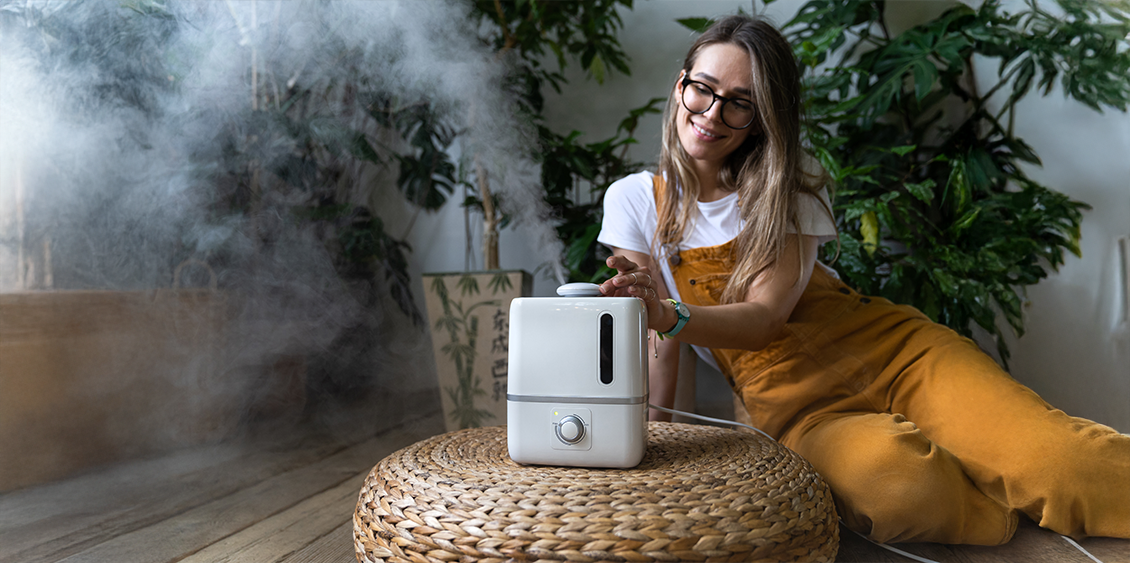
A woman uses a humidifier in her home

Why use a humidifier?

Humidifiers provide many benefits for your health and overall well-being. They’re especially useful for maintaining good health, including healthy skin.

Health benefits

  • Humidifiers relieve respiratory symptoms, making them ideal for people with asthma.
  • They help clear nasal passages.
  • They help reduce congestion, which is especially useful when dealing with a cold, flu, or case of sinusitis.
  • They prevent nosebleeds, which happen more often during the winter.
  • They improve sleep quality and reduce snoring and throat irritation.

Skin benefits

Air that’s too dry dehydrates the skin, which can cause itching and aggravate certain skin conditions. Adequate moisture levels help maintain your skin’s natural hydration and prevent irritation.

Eczema, for example, can be triggered by a dry environment and dry skin. See 10 tips to prevent and treat eczema.


Did you know? According to Health Canada, maintaining humidity levels between 30% and 50% in your home can reduce respiratory symptoms associated with dry air by as much as 36%.

What’s the best type of humidifier: Cool-mist or warm-mist?

Let’s be clear—when it comes to humidifiers, there’s no one-size-fits-all solution. The best choice for you takes into account your needs, the size of your space, your budget, and your personal preferences. Here are the characteristics of the two main types of humidifier:

✦ Cool-mist humidifiers

This type of humidifier is the most affordable option and suitable for most people. The mechanism is powered by a motor that agitates water at room temperature, releasing a cool mist into the air through evaporation or ultrasonic technology.

This type of humidifier has several advantages:

  • It’s very safe and poses no burn risk
  • It doesn’t consume a lot of energy
  • It slightly cools the ambient air

That said, cool-mist humidifiers can release minerals and bacteria into the air if you don’t use filtered water. They must be thoroughly cleaned on a regular basis. They are ideal for children’s rooms, warm climates, and prolonged use without constant monitoring.

✦ Warm-mist humidifiers

This type of humidifier boils water to produce steam, which is then cooled and diffused into the ambient air. The steam eliminates bacteria, germs, and mould. The warmth it produces feels good during the dry winter months.

However, this technology has certain drawbacks and risks:

  • There is a risk of burns while handling the appliance
  • It consumes a lot of energy
  • The sound of boiling water can be disruptive, especially in a bedroom.

Warm-mist humidifiers are ideal for very cold climates and provide rapid relief from nasal congestion when you have a cold or the flu.

Other humidifier types

If you’re looking to optimize performance and health benefits, there are other types of humidifier to consider. They are a little pricier, but come with certain features—notably hygienic features—that offer health benefits for the whole family.

✦ Ultrasonic humidifiers

This technology uses ultrasonic vibration to transform water particles into a fine mist. These humidifiers are available in warm or cool versions, depending on the model. They are ideal for bedrooms and offices, as well as for people who are very sensitive to noise.

Pros

  • Silent
  • Doesn’t consume a lot of energy
  • Most models offer a choice of warm or cool mist

Cons

  • Sometimes leaves a powdery white residue on surrounding surfaces
  • Requires distilled or demineralized water for best results

✦ Ultraviolet (UV) humidifiers

These humidifiers combine traditional humidifier technology with an ultraviolet (UV) sterilization system, adding an extra layer of protection against contaminants. They are ideal for anyone who is immunocompromised, asthmatic, or looking to minimize their exposure to mould and bacteria.

Pros

  • UV rays effectively destroy germs and bacteria in the water
  • Combines the safety of cold steam with the hygiene of hot steam
  • Reduces the risk of respiratory infections

Cons

  • The UV bulb needs to be replaced regularly, every 6 to 12 months depending on use.
  • Usually more expensive than other humidifiers

How to choose a humidifier?

There are a few key selection criteria that will help you pick the best humidifier for your needs, your home environment, and the health of everyone in your family.

1 – Room size

For small rooms under 30 square metres (322 square feet), a compact or portable humidifier will do the trick. These models are usually budget friendly and easy to move around as needed.

For large rooms or entire homes, choose a high-capacity model, or consider installing a central humidifier connected to your heating system for even distribution.

2 – Reservoir capacity

Tanks that hold 1 to 3 litres of water are ideal for nighttime use (6 to 12 hours), making them a great choice for bedrooms.

Tanks that hold 4 litres or more can run continuously for 24 hours or longer, making them ideal for main living areas or large families.

Tip: Choose a tank that’s easy to fill and clean, with an opening wide enough to facilitate daily maintenance.

3 – Noise level

Quiet models that produce fewer than 30 decibels, such as ultrasonic humidifiers, are ideal for bedrooms and quiet work spaces.

4 – Extra features

A built-in hygrometer automatically monitors and adjusts humidity levels, giving you optimal comfort without the need to constantly monitor and adjust its settings.

An automatic shutoff feature turns off the unit once the tank is empty, preventing damage and giving you peace of mind.

Bonus features: Some models come with an essential oil diffuser to add natural scent, or a programmable timer to preset operating hours.

How to maintain your humidifier?

Regular maintenance will keep your appliance running smoothly and help prevent the health risks associated with the proliferation of harmful micro-organisms.

  • Change out the water completely to prevent stagnation and keep bacteria at bay.
    • Tip: Use distilled water to extend component life and reduce mineral deposits.
  • Clean the tank every three days with white vinegar, or use the cleaning tablets recommended by the manufacturer.
    • Tip: Never use bleach, as it can damage internal components and release toxic fumes.
  • Replace filters and cartridges regularly according to the manufacturer’s recommendations. It’s a simple way to better protect your airways and maintain optimal air quality.
  • Between each use, empty the unit completely and allow it to air dry to prevent the formation of mould. This is especially important if you haven’t used the humidifier for a while.


Important! Don’t add essential or scented oils (unless your humidifier has this feature) or medicated liquids directly to the water, as they can irritate the respiratory tract and damage the appliance’s components.

Should I run a humidifier while I sleep?

While doing so provides definite health benefits, certain precautions are recommended.

Sleeping with a humidifier on can considerably improve sleep quality by keeping your airways hydrated and reducing nighttime irritation. This is particularly beneficial for people who snore or have nasal congestion or a dry throat at night.

Are humidifiers dangerous for babies and children?

On the contrary, a humidifier is also beneficial for their health. Babies and young children are particularly sensitive to dry air. A bedroom humidifier can significantly relieve congestion and promote more peaceful sleep, helping to reduce the frequency of nighttime wake ups.

Tip: Humidity levels should never exceed 50% to avoid the proliferation of mould and dust mites, which can aggravate allergies and asthma, especially in toddlers, who are more at risk.


Frequently asked questions

Humidifier or dehumidifier: What’s the difference?

A humidifier adds moisture to dry air (humidity under 30%), while a dehumidifier removes excess moisture from humid air (humidity above 60%). In Quebec, the use of a humidifier is recommended in winter, when heating dries out the air.

Humidifier or air purifier: Which should I use?

A humidifier improves moisture levels to relieve dry airways, while a purifier filters particles, allergens, and pollutants from the air. These appliances are complementary. You can use both simultaneously to optimize the quality and comfort of your indoor air.

How often should I run my humidifier?

Use your humidifier as long as humidity levels are below 30%, which is usually the case throughout fall and winter. Monitor humidity levels with a hygrometer and switch off the unit as soon as humidity reaches 50% to prevent the proliferation of mould and dust mites.


Do you have breathing problems, dry skin, or trouble sleeping? A humidifier might help. At Brunet, our pharmacists have the knowledge to help you choose the right humidifier for your needs. Don’t hesitate to consult your health care professional for personalized recommendations and advice on how to use one.

img-article

Did you like this article?

Subscribe to our newsletter to stay in touch.

×
Pick up location

You may change the store at any time.

Please click on Search to display the results.
×
Store change

Loading...