Cold sores: Causes and treatments

Do you have a tingling or itching sensation on your lip? This symptom may be a sign that a cold sore is forming. We explain how to recognize and treat cold sores, as well as how to prevent the spread of the virus that causes them.

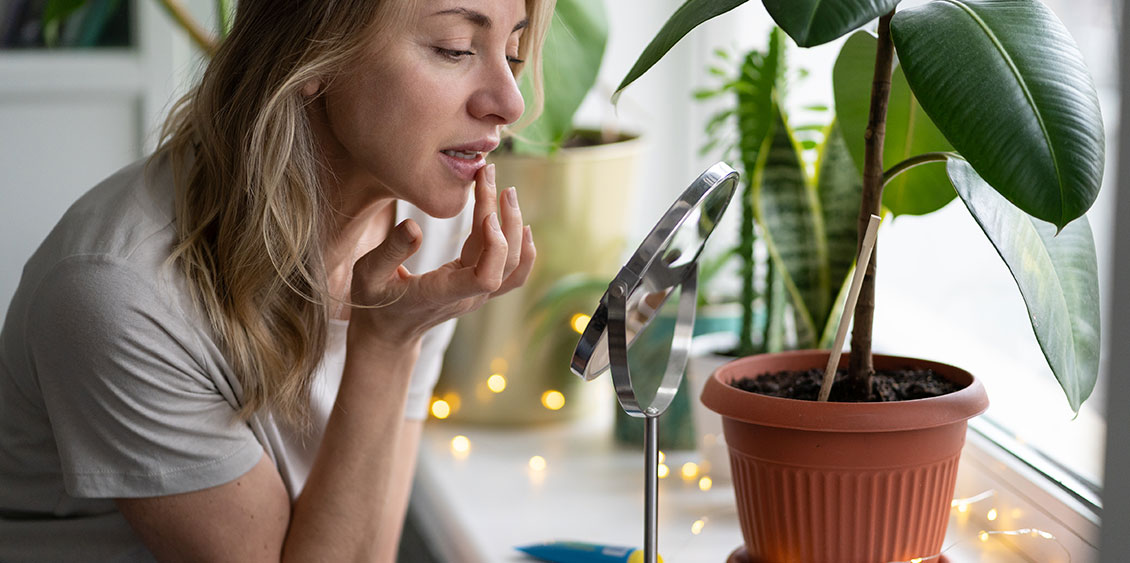
A woman in front of a mirror applying cream to her cold sore blisters

Cold sores: Causes and treatments

Have you ever noticed a small, translucent bump on your lip and wondered if it’s a cold sore? If you have an uncomfortable, unsightly lesion on your mouth, it may indeed be a cold sore. Read on to learn more.

Cold sores (herpes labialis) are small fluid filled blisters (vesicles) that form when you have a herpes simplex virus infection. They are most often found on the lips or around the mouth.

Are you wondering if that bump really is a cold sore and if so, what your treatment options are? We explain how to recognize and treat cold sores, as well as how to prevent the spread of the virus that causes them.

What causes cold sores (herpes labialis)?

Do you have a tingling or itching sensation on your lip? Oh no, here we go again... This symptom is often a telltale sign that a cold sore is forming. Cold sores are caused by herpes simplex virus type 1, which affects 80% of the population.

The first time you come into contact with the virus, which is to say during the primary infection, you may not have any symptoms at all. However, herpes labialis is a recurrent infection in 20% to 40% of people affected by it, as the virus remains in the body for life. It remains inactive in the lymph nodes without causing symptoms until the next flare-up. People affected by the virus tend to experience an average of two to three outbreaks a year, but this number can be higher in some people.

Transmission

It’s important to note that herpes labialis is highly contagious. However, there are a number of steps you can take to prevent its transmission, such as:

  • Avoiding close contact (e.g., kissing) with others until the cold sore has disappeared
  • Avoiding sharing personal items (e.g., toothbrushes, utensils, makeup)
  • Avoiding touching your cold sores unnecessarily
  • Washing your hands after touching a cold sore
  • Avoiding contact between your mouth and your partner’s genitals during sexual intercourse

How do you know if you have a cold sore?

Is it a lip pimple or a cold sore?

Cold sores go through several stages before disappearing completely. If you want to act quickly and speed the healing time, it’s important to recognize the symptoms of the first stage, known as prodrome.

The 5 stages of cold sore symptoms

1 - Prodrome

This stage occurs before the lesion actually appears. It lasts less than 24 hours, and may be accompanied by any of the following symptoms: itching, tingling, pain, or burning. Not everyone experiences symptoms at the prodrome stage, however.

2 - Redness

Prodrome is followed by the appearance of redness, which can last 1 to 2 days.

3 - Blisters

Small raised blisters filled with transparent fluid start to appear. The skin may also swell. This stage is the most contagious.

4 - Scabbing

The blisters eventually burst, and the liquid forms a crust as it dries. This crust may last for a few days.

5 - Healing

After 8 to 10 days, the skin regenerates and all traces of the cold sore disappear.

What triggers cold sore outbreaks?

In between outbreaks, the herpes simplex virus remains inactive for a period of time before reappearing. That’s why herpes labialis is considered a recurrent infection. Certain factors are more likely to trigger an outbreak, including the following.

Causes of cold sores

  • Fever
  • Other infections, like a cold
  • Menstruation
  • Fatigue
  • Stress
  • Exposure to sunlight or tanning booths
  • Dry lips
  • Injured or irritated lips
  • Weakened immune system

How long do cold sores remain contagious?

Cold sores are highly contagious, so it’s strongly recommended to avoid close contact with anyone who has a lesion, or if you have one yourself. However, cold sores are not dangerous and will go away on their own, usually within 8 to 10 days.

How do I get rid of a cold sore fast?

Over-the-counter treatments

If you’re uncomfortable with the idea of having a rather obvious lesion on your face, there are targeted treatments that can limit the extent and duration of cold sore outbreaks. Two over-the-counter cold sore medications are approved for sale in Canada:

  • AbrevaTM (docosanol)
  • LipactinTM (zinc and heparin)

These products are most effective if you apply them as soon as you notice you’re getting a cold sore, as directed by the label. These treatments are very safe and have few side effects.

Once the cold sore has crusted over, you can apply a moisturizing product, such as a cream, ointment, or balm. This will keep you comfortable and speed up healing. Attempting to apply other products could cause irritation or spread the infection.

Always ask your pharmacist for advice before using over-the-counter medications.

Prescription treatments

If you tend to have several outbreaks of cold sores per year, your doctor or pharmacist may prescribe an antiviral such as acyclovir, valacyclovir, or famciclovir. These medications, available in cream or tablet form, are more effective than over-the-counter products. Once again, it’s important to use the medication as early as possible, which is to say as soon as the first symptoms appear.

Tip: Make sure you always have a dose of antiviral medication on hand so you can treat outbreaks at the first sign.

Helpful advice

Finally, there are a few things you can do to manage your cold sore symptoms and reduce the risk of spreading the virus:

  1. Don’t pop the blisters, as the fluid inside can spread the virus.
  2. Apply an ointment to the scab to keep it moist and prevent chapping, which increases the risk of a bacterial superinfection.
  3. Wash your hands often, especially if you tend to touch your cold sores throughout the day.
  4. Discard any makeup that has come into contact with a cold sore to prevent reinfection.
  5. Avoid triggers (e.g., by applying sunscreen to your lips or reducing stress).

Here at Brunet, we’ll be happy to answer any questions you may have about cold sores. Your pharmacist can help you find the right products and remind you what to do when dealing with a cold sore. Your pharmacist can also tell you when your situation may require a visit to your doctor. Don’t hesitate to ask us for assistance. We’ll help get your cold sores under control in no time!

Last updated on January 12, 2026

img-article

Did you like this article?

Subscribe to our newsletter to stay in touch.

×
Pick up location

You may change the store at any time.

Please click on Search to display the results.
×
Store change

Loading...